The Spiritual Fortress of Gummalapura
Gummalapura Matha and the Revana-siddeshwara Lineage
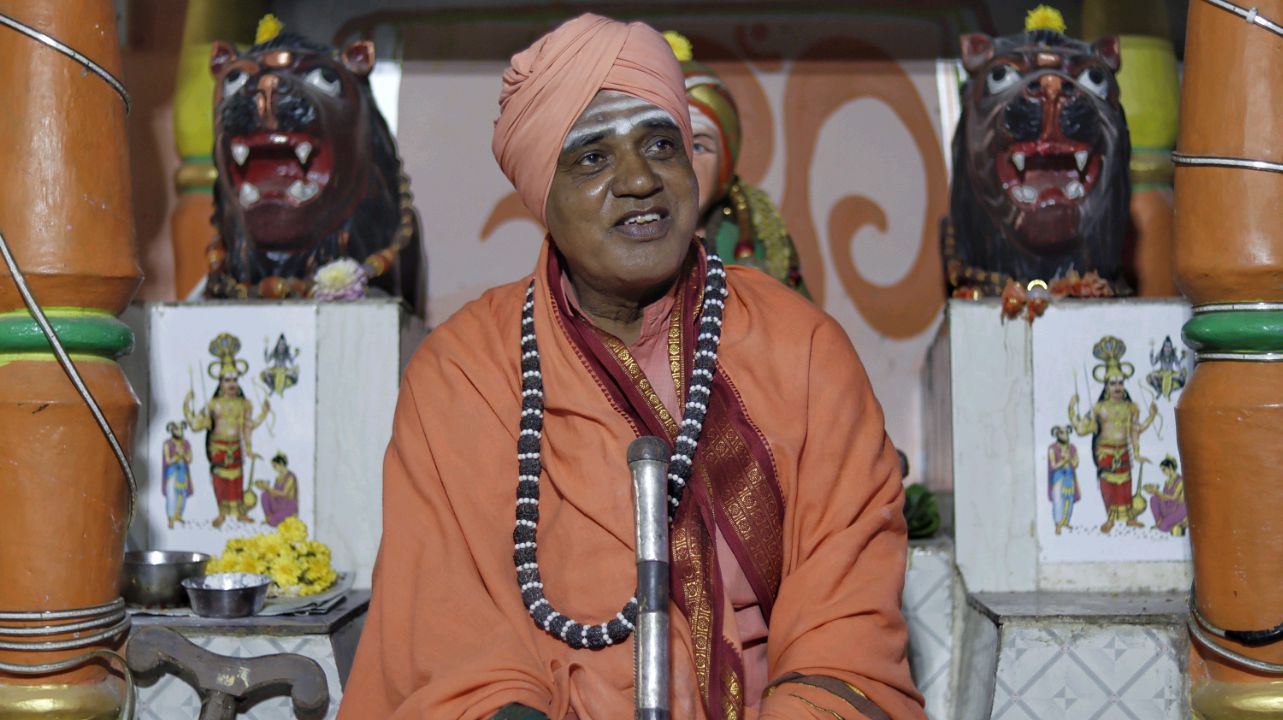
Sri Sri Sri || Pa || Bra || Dr. Pattada Shivananda Shivacharya Mahaswamigalu
Sri Sri Sri || Pa || Bra || Dr. Pattada Shivananda Shivacharya Mahaswamigalu
The revered Mahaswamigalu of the Pattada lineage continue to guide devotees with wisdom, compassion, and unwavering devotion to Sanathana Dharma.
Under their grace, the temple traditions, Annadana seva, and the annual Gowramma Jathre are preserved and nurtured for future generations of devotees.
Gummalapura Matha
The Gummalapura Matha was a centre of Veerashaiva learning and spiritual authority. The 1606 inscription transformed the village into a fortress of wisdom where saints, poets, and royal disciples gathered under the guidance of its pontiff.
- Branch of the renowned Balehonnur Matha
- Belongs to the tradition of Revana-siddeshwara of Kollipakai
- Many Veerashaiva poets lived and composed here
Sage Nanjedeva — The Royal Guru
Nanjedeva was the head of Gummalapura Matha when Immadi Kempegowda issued the 1606 grant. He held the honoured position of royal guru to the chiefs of Elahanka and Sugatur, wielding both spiritual and political influence across the region.
- Received grant of Malur village on November 17, 1606
- Referenced as guru in EC X Kolar 64 (dated 1614)
- Presided over a thriving community of Veerashaiva scholars
Revana-siddeshwara Lineage
The Matha traces its spiritual ancestry to Revana-siddeshwara of Kollipakai, one of the luminous figures of the Veerashaiva tradition. This lineage connected Gummalapura to the wider network of Lingayata maths that shaped medieval Karnataka's religious and literary culture.
- Kollipakai (Kalyana) tradition of Veerashaiva saints
- Linked to Balehonnur Matha's spiritual succession
- Veerashaiva folklore remains vibrant in the border region
Source: Karnataka Itihasa Academy
Immortal Vachanas of Gowramma Gummalapura
Brilliant Veerashaiva poets composed devotional verses in Kannada and Telugu, reflecting the borderland's unique cultural synthesis.
Rudra Kavi
A celebrated Veerashaiva poet who lived in the Gummalapura region during its golden era of spiritual and literary activity.
Composed immortal Vachanas blending devotion, social reform, and poetic brilliance in both Kannada and Telugu.
Nagalinga Deva
Among the known poets of the Veerashaiva sect who made Gummalapura their creative home.
His bilingual Vachanas reflect the unique borderland culture where Kannada, Telugu, and Tamil traditions merge seamlessly.
The 771 Shivasharanas
Saint-poets and devotees who chose Gowramma Gummalapura as a site of spiritual refuge and creative expression.
Their collective presence established the sacred geography of 101 temples, wells, and lakes that defines Gummalapura today.