About the Temple & Village
Gowramma Gummalapura — Where Shiva is the Eternal Son-in-Law
Sri Gowramma — Mother of the Universe
Sri Gowramma is the presiding deity of Gummalapura village. She is a manifestation of the divine Mother — Goddess Parvati — the eternal consort of Lord Shiva. The temple is her earthly abode, believed to have been established over 3,000 years ago by the earliest settlers of this sacred land.
The goddess is worshipped as the protector of the village, the giver of rain and harvest, the healer of the sick, and the fulfiller of devotees' wishes. Every household in Gummalapura considers her the mother of the family.
Her festival — the Gowramma Jathre — held approximately 30 days after the Ganesha festival each year, is the largest gathering in the region, drawing tens of thousands of pilgrims from across Karnataka, Tamil Nadu, and Andhra Pradesh.
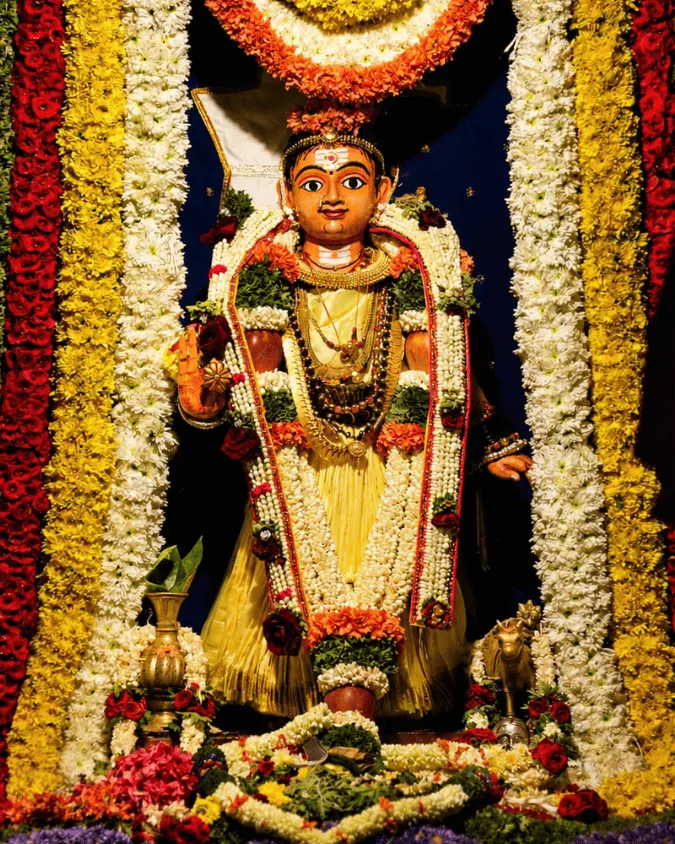
Sri Gowramma Devi in the Garbha Gudi, Gummalapura
Why Shiva is the Son-in-Law of Gummalapura
Gowramma as the Mother
In Gummalapura's tradition, Sri Gowramma (Parvati) is worshipped as the village's own daughter — born of this sacred land. She is the Mother Goddess who resides here.
Shiva as the Bridegroom
When Lord Shiva married Gowramma (Parvati), he became the son-in-law of the village. This is why Lord Shiva is addressed as "Alave Aliya" (the eternal son-in-law) in local tradition.
101 Shiva Temples
To honour this sacred marriage, 101 Shiva Lingams were consecrated across the region — a symbol of Shiva's divine presence in every corner of the mother's domain.
101 Wells & 101 Lakes
Along with the temples, 101 wells and 101 lakes were built — a complete sacred geography that sustains both spiritual and agricultural life in the region.
"In Gummalapura, Shiva does not reign as the lord — he arrives as the devoted son-in-law, bowing to the Mother who welcomed him."— Local village oral tradition, passed down for generations
Gowramma's Annual Visit
From that day, Parvati arrives in Gouri form each year and stays in her parental home for about a month, receiving worship and care before returning to Kailash. Devotees from Karnataka, Tamil Nadu, and Andhra Pradesh treat her as their own mother.
Read Full Mythology →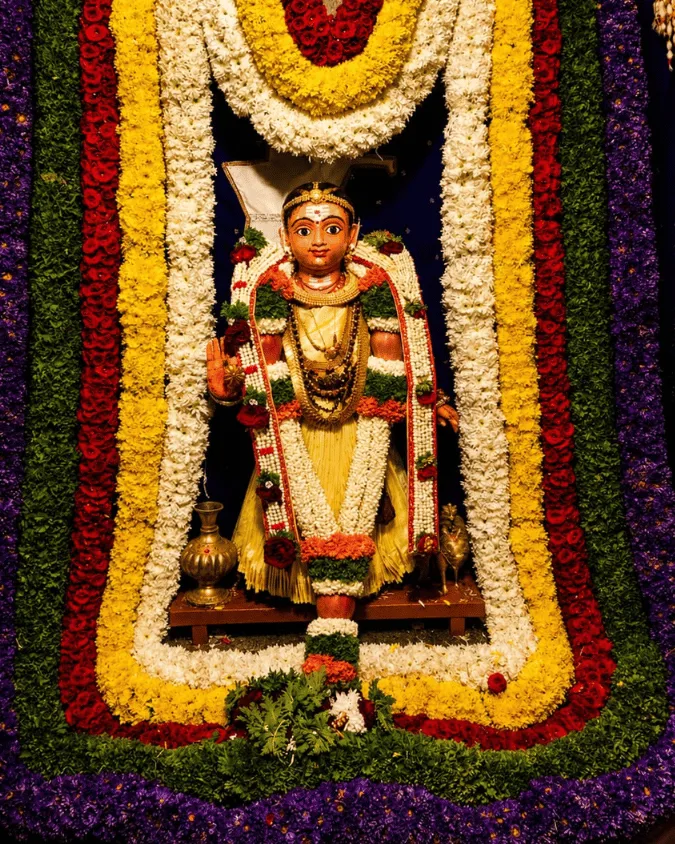
Divine darshan of Mother Gowramma during her annual homecoming
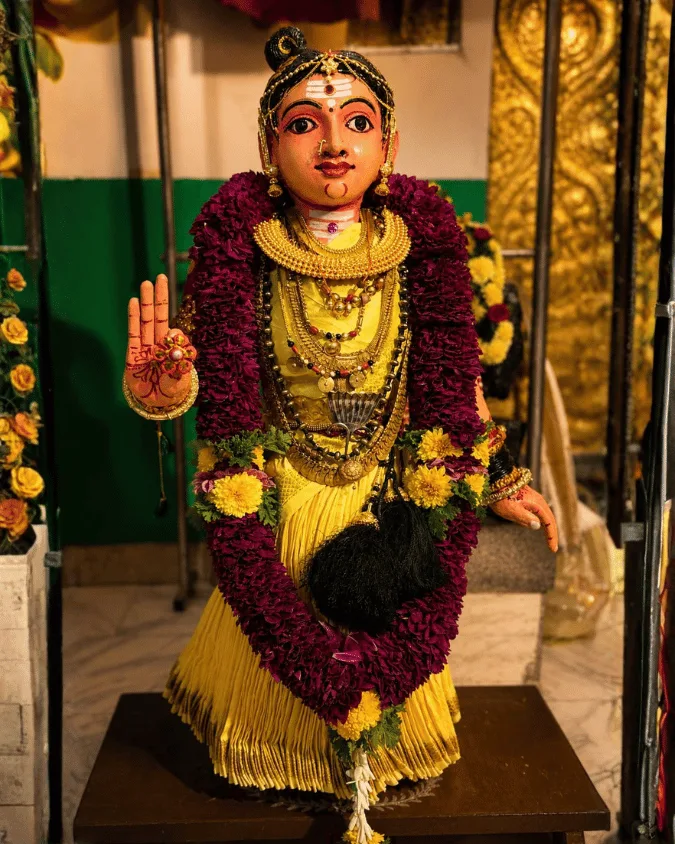
Sri Gowramma Devi in the Garbha Gudi, Gummalapura
Gowramma Gummalapura — The Earthly Kailash
Gummalapura, in Thally Block, Krishnagiri District, Tamil Nadu — on the Karnataka–Tamil Nadu border, ~45 km from Bengaluru — is known by the ancient name Gowramma Gummalapura, "The Kailash of the Earth."
The village sits at the heart of a sacred geography laid out by the 771 Shivasharanas — the great saint-devotees of the Veerashaiva-Lingayata tradition who chose this land as a site of spiritual refuge.
In 1606 CE, the powerful Palegara king Immadi Kempegowda issued a stone inscription (now preserved at the temple) granting land and rights to the temple — a testament to its importance across centuries of Karnataka's history.
How the Temple is Managed
Sri Gowramma Devi Seva Samithi
Managed by the official Seva Samithi representing Gummalapura and the surrounding region.
Annadana Seva
Free meals during Amman's annual one-month presence only — mandatory receipt; prior Samithi registration required.
Darshan & Rituals
Darshan during Amman's presence month: 10 AM–6 PM and 8:30–10 PM. Fixed timings per Mysore Samsthana tradition.
Heritage Documentation
The trust actively works to document the temple's history — including the 1606 inscription, oral traditions, and the Shivasharana legacy.
Documentary: 3,000 Years of Heritage
Heritage & History
Dive into the detailed history, the 1606 inscription, and the timeline
Explore →Festivals & Culture
Discover the Gowramma Jathre, Veeragase, and Nadaswaram traditions
Explore →Plan Your Visit
Directions from Bengaluru, temple timings, and travel tips
Explore →E-Hundi (Donate)
Support the temple and Annadana Seva with a sacred offering
Donate →